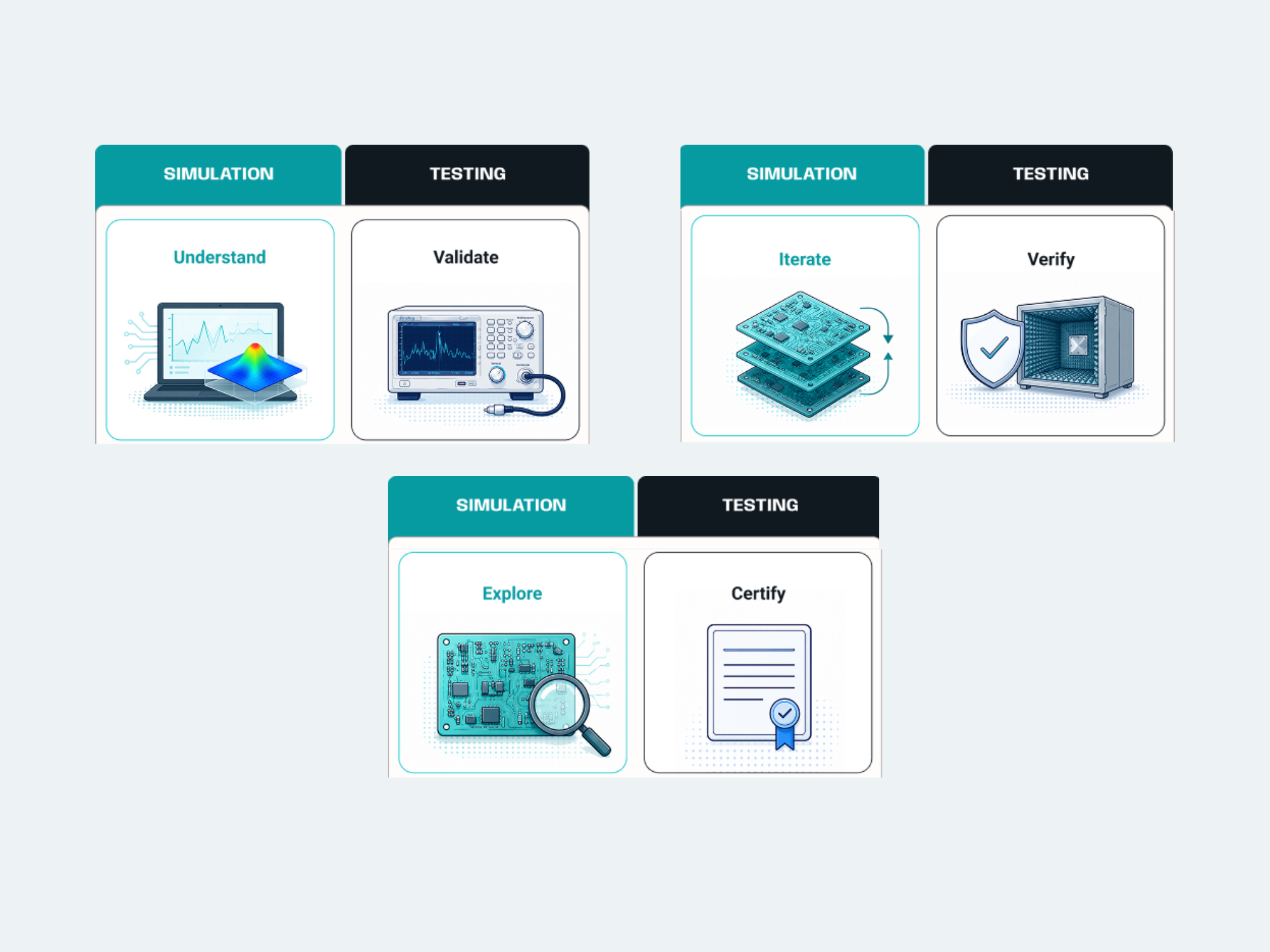
But seriously, we keep talking about it. Let us keep it simple now What is EMI/EMC simulation? And why do engineers use it before compliance testing? This is a practical introduction.
Every electronic product eventually needs EMC testing.
Whether it's an automotive ECU, a medical device, or an industrial controller, it must prove two things:
✓ It doesn't emit excessive electromagnetic noise
✓ It keeps working when exposed to interference
But by the time you reach the test lab, most design decisions have already been made.


The lab tells you one thing about your design with certainty:
✓ Pass or fail
✓ At which frequencies
✗ Why it failed
✗ What to change
✗ Whether the next version will be better
The lab shows you that something failed. It can't show you why.
So where does simulation fit?
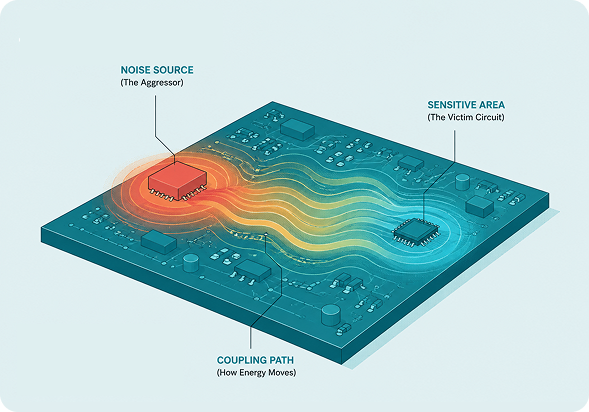
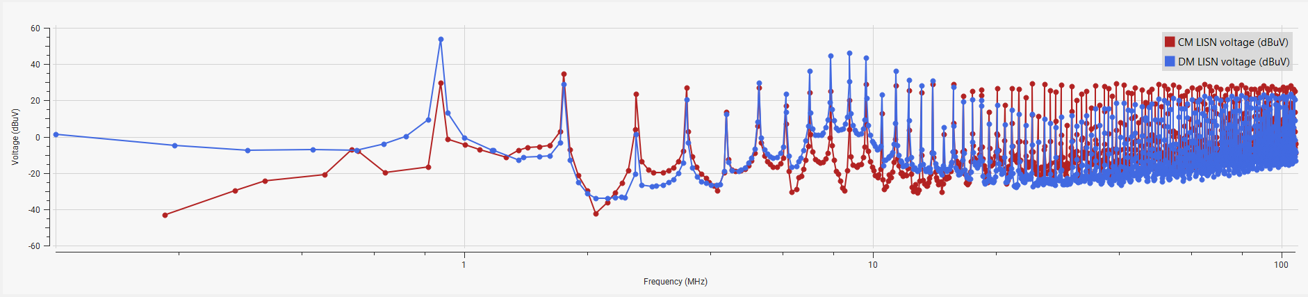
EMI/EMC simulation creates a virtual representation of your design and predicts how electromagnetic behaviour may affect it before you build or modify hardware.
It helps engineers answer questions like:
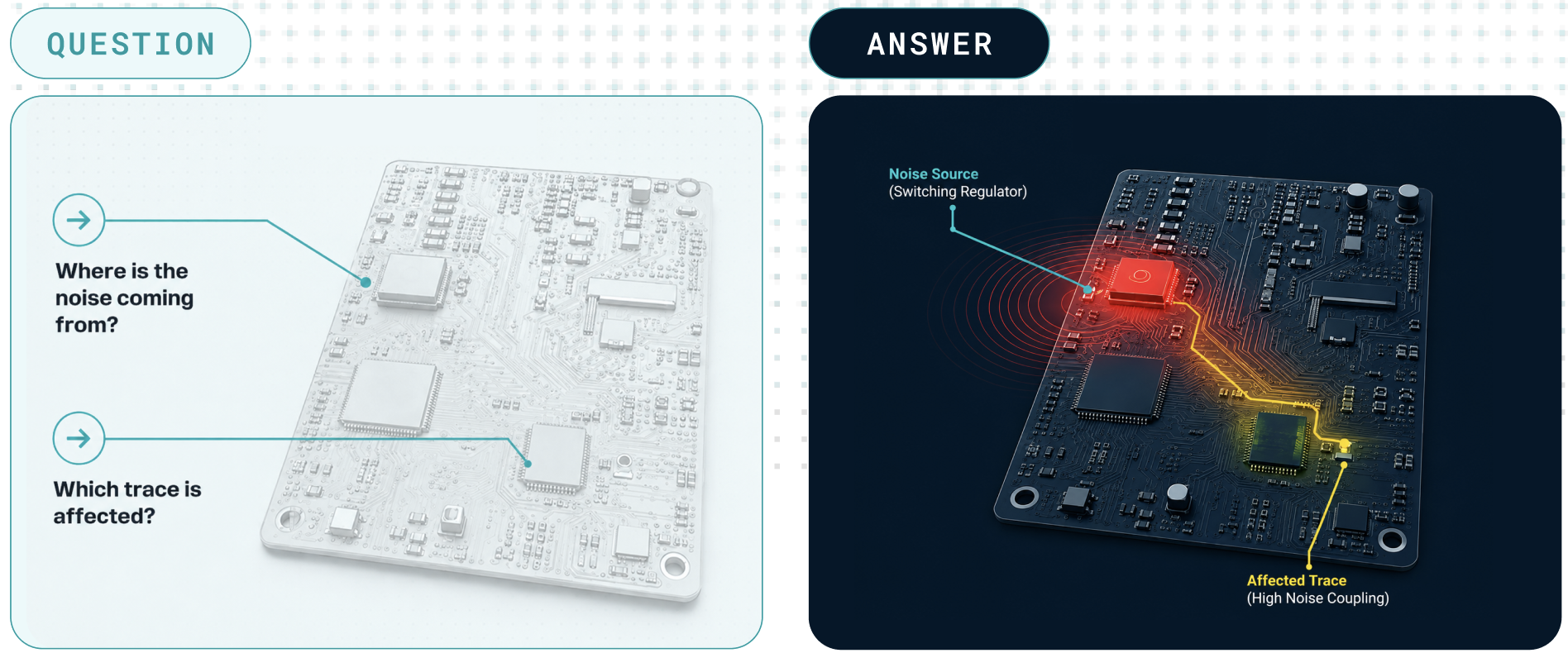
- Where is noise coupling into my design?
- Which signals are most susceptible?
- What happens if I change the layout?
- Will this mitigation actually work?
What simulation can tell you
Instead of "pass" or "fail," simulation helps you understand why.
It can help engineers:
- Evaluate design changes
- Reduce trial-and-error
- Build confidence before the next hardware iteration
Simulation is not a substitute for compliance testing.
Physical testing remains essential for certification.
Simulation simply gives engineers the visibility to make better decisions before they get there.

Better decisions start with better visibility.
Simulation doesn't eliminate physical testing.
It helps engineers get more value from every prototype, every board revision, and every trip to the lab.
Follow SimYog for practical insights on EMI/EMC simulation, compliance, and engineering workflows.
Ready to run your first simulation?
Get a technical walkthrough or schedule a demo with our engineering team